
Sumo is not just “big wrestling”; it is a short, rule-heavy combat sport where balance, grip fighting, footwork, and force decide the match in seconds. Compared with freestyle, Greco-Roman, folkstyle, judo, boxing, or MMA, sumo rewards a different mix of size, timing, discipline, and ring control. The goal is simple: force the opponent out of the ring or make any body part other than the soles of the feet touch the ground.
TLDR: Sumo wrestling is faster and more specialized than most traditional wrestling styles, with many top-level bouts ending in under 10 seconds. Traditional wrestling rewards control over longer exchanges, while sumo rewards instant pressure, balance breaks, and ring awareness. For example, a 120 kg athlete with strong legs may do well in sumo if they can explode forward and stay upright, but that same athlete may struggle in freestyle wrestling without mat endurance and ground defense. If you want a sport with brief, intense clashes, sumo fits; if you want chain wrestling and longer tactical exchanges, traditional wrestling is usually the better match.
What makes sumo different?
Sumo takes place in a circular ring called a dohyo. There are no rounds in the usual sense. There is no point scoring during the bout. A wrestler wins by pushing, throwing, lifting, tripping, or forcing the opponent into a losing position.
This creates a harsh truth: one mistake can end everything. A bad first step, a weak hand placement, or a heel near the straw boundary can decide the result before the crowd has even settled.
It drives me crazy when short clips present sumo as a simple collision. That misses the sport. Serious sumo involves reading pressure, controlling the center line, attacking the belt, defending the edge, and using an opponent’s force against them.
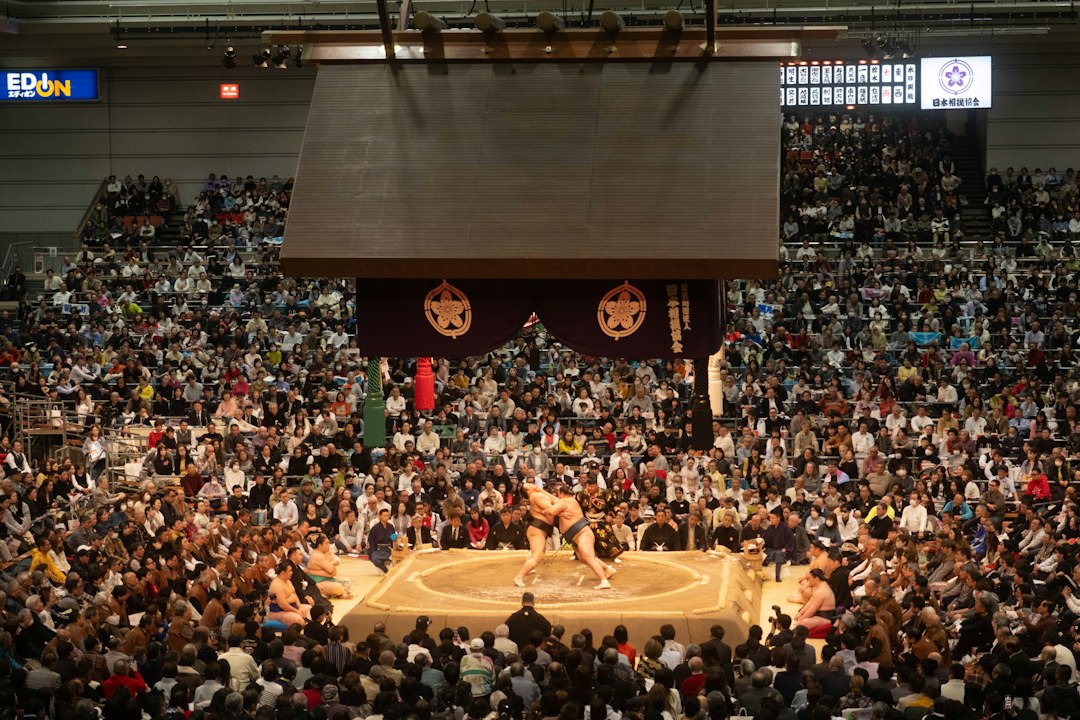
Sumo wrestling vs traditional wrestling
Traditional wrestling usually refers to styles such as freestyle, Greco-Roman, and folkstyle. These sports are built around takedowns, exposure, pins, escapes, reversals, and riding time, depending on the ruleset.
- Sumo: Win by pushing the opponent out or making them touch down.
- Freestyle wrestling: Score through takedowns, turns, exposure, and control.
- Greco-Roman wrestling: Upper-body attacks only; no leg attacks.
- Folkstyle wrestling: Common in the United States; control and riding are heavily rewarded.
The biggest difference is time under tension. A sumo bout may last only a few seconds. A wrestling match can last several minutes and has repeated scrambles. That changes training. It changes body types. It changes tactics.
In sumo, the opening charge, called the tachiai, is critical. In freestyle wrestling, the first contact matters too, but it rarely decides the entire match at once. A wrestler can give up a takedown and still recover. In sumo, recovery space is tiny.
Rules shape the athlete
Sumo allows slaps, belt grips, body locks, trips, throws, and powerful shoves. It bans punches, kicks, hair pulling, eye attacks, choking, and finger manipulation. Traditional wrestling also bans strikes, but its mat rules create far more ground engagement.
That is why a sumo wrestler trains to stay upright at all costs. Touching a hand to the ground, even for a split second, can mean defeat. In freestyle, placing a hand down may be part of a defense. In sumo, it can be fatal to the bout.
This rule difference produces very different instincts. A freestyle wrestler often lowers their level and attacks the legs. A sumo wrestler often meets force with a heavy stance, forward pressure, and hand control near the chest, throat, shoulders, or belt.
Body size and strength
Sumo is famous for large athletes, but size alone is not enough. Elite sumo wrestlers can be extremely fast over short distances. They need hip power, thick legs, grip strength, and balance under heavy contact.
Traditional wrestling has weight classes with tighter limits. A 57 kg freestyle wrestler and a 125 kg heavyweight are both elite athletes, but their matches look very different. Sumo has ranked competition rather than the same weight-class structure seen in Olympic wrestling. This means lighter sumo wrestlers may face far heavier opponents.
That sounds unfair, and sometimes it is. Still, skill can close the gap. A lighter wrestler can win with timing, sidesteps, arm pulls, trips, and edge technique. The problem is obvious: against a trained opponent who is 40 or 60 kg heavier, tiny errors become expensive.
Sumo vs judo, MMA, and striking sports
Sumo shares some overlap with judo. Both use balance breaks, throws, grips, and body positioning. Yet the goals differ. Judo rewards clean throws and can continue on the ground. Sumo stops the moment the opponent exits the ring or touches down.
Compared with MMA, sumo is much narrower. There is no punching, kicking, submission grappling, cage work, or round-based scoring. Still, sumo can help MMA fighters in one area: clinch pressure. A fighter who understands how to move another body backward, deny space, and punish poor balance has a useful skill.
Against boxing or kickboxing, the contrast is sharper. Striking sports rely on distance, timing, head movement, and repeated impact. Sumo has contact too, but it is mostly collision, grip, and displacement. A sumo wrestler does not need to win a jab exchange. A boxer does not need to defend a belt throw.

Training and daily routine
Serious sumo training is demanding. Wrestlers drill footwork, pushing attacks, belt work, charge timing, squats, stomps, and repeated bouts. Traditional rituals are also part of the sport, especially in Japan, where professional sumo carries deep cultural weight.
Traditional wrestlers train differently. They spend long hours on shots, sprawls, stand-ups, mat returns, bridging, pummeling, and live wrestling. Conditioning often includes running, circuits, rope climbs, partner carries, and hard drilling.
The energy systems differ. Sumo is based on explosive output. Traditional wrestling requires repeated bursts across several minutes. MMA adds another layer, since athletes must manage striking, grappling, clinch work, and defense across rounds.
Risk and injury profile
No combat sport is gentle. Sumo places huge stress on knees, ankles, hips, neck, and shoulders. The heavy impact at the tachiai can also strain the head and spine. Falls from throws may be awkward because the ring is raised and compact.
Traditional wrestling brings its own risks: shoulder injuries, knee ligament tears, cauliflower ear, concussions, neck strain, and skin infections. MMA and striking sports add higher risk from repeated head trauma and facial injury.
For beginners, coaching quality matters more than style choice. Poor instruction leads to bad falls, reckless sparring, and preventable injuries. Honestly, it feels like people spend more time arguing which sport is “tougher” than asking whether the gym teaches safe basics.
Which athletes cross over well?
Some skills transfer. A Greco-Roman wrestler may adapt well to sumo because upper-body control, pressure, and throws are central. A judoka may bring excellent balance, grip fighting, and foot sweeps. A football lineman may have the explosive start and mass needed for early success.
But crossover is not automatic. Sumo has its own timing. The ring boundary changes every decision. A strong wrestler who shoots low can lose instantly if a hand touches down. A judoka used to jacket grips must adjust to the belt and body contact of sumo.
Useful crossover traits include:
- Short-range power from the legs and hips.
- Balance under pressure while moving backward or sideways.
- Grip strength for belt and body control.
- Calm reactions near the edge of the ring.
- Sport-specific humility, because old habits can cause quick losses.

Which sport is harder?
The honest answer is that “harder” depends on the test. Sumo is brutally unforgiving. Traditional wrestling is physically draining over longer periods. MMA demands the broadest skill set. Boxing has some of the highest demands for striking timing and defensive awareness.
If the test is instant force and balance, sumo is severe. If the test is continuous grappling control, freestyle or folkstyle wrestling may be tougher. If the test is all-around fighting, MMA asks more technical questions.
Best choice for beginners
Choose sumo if you want a direct sport built around power, balance, ritual, and fast decision-making. Choose traditional wrestling if you want a deep grappling system with takedowns, control, and conditioning. Choose judo if you like throws with a jacket. Choose MMA if you want a broad combat ruleset that includes striking and submissions.
Sumo deserves to be judged on its own terms. It is not a lesser version of wrestling. It is a distinct combat sport with strict rules, intense pressure, and a clear demand: stay standing, control space, and make the other person lose first.