

Betting on the Nobel Peace Prize sits at the unusual intersection of politics, diplomacy, public opinion, and speculative markets. Unlike sports betting, where recent form and measurable performance often dominate, Nobel Peace Prize odds are shaped by opaque committee deliberations, global events, media narratives, and market sentiment. That makes the market interesting, but also highly uncertain and unsuitable for casual assumptions.
TLDR: Nobel Peace Prize betting odds can highlight public expectations, but they should not be treated as reliable predictions. For example, if a candidate is listed at 5.00 decimal odds, the implied probability is about 20% before bookmaker margin, not a guarantee of serious committee support. A cautious bettor might compare three markets, track line movement over two weeks, and stake no more than 1% to 2% of a betting bankroll because the outcome is highly unpredictable.
How Nobel Peace Prize Betting Odds Work
Nobel Peace Prize betting markets usually appear in the weeks or months leading up to the October announcement. Bookmakers publish a list of potential winners, assigning each nominee or public figure a price. These prices are commonly shown as decimal odds, fractional odds, or American odds, depending on the operator and region.
Decimal odds are the simplest to interpret. A price of 4.00 means a successful 10-unit stake returns 40 units in total, including the original stake. To estimate the implied probability, divide 1 by the decimal odds. For example, 1 ÷ 4.00 = 0.25, or 25%. However, this is only an approximation because bookmakers build in a margin, sometimes called the overround.
In this market, odds can move sharply after news coverage, geopolitical developments, peace negotiations, or viral social media speculation. A humanitarian organization involved in a major crisis, for instance, may shorten dramatically if journalists and analysts begin framing its work as prize-worthy.
Who Are Usually the Favorites?
Favorites in Nobel Peace Prize betting tend to fall into several broad categories. These are not official signals from the Norwegian Nobel Committee; they are market interpretations based on public information and betting behavior.
- Human rights activists: Individuals working against political repression, discrimination, or state violence often attract sustained attention.
- International organizations: Groups involved in humanitarian aid, refugee protection, nuclear disarmament, press freedom, or public health are frequent contenders.
- Peace negotiators: Leaders, diplomats, or mediators connected to ceasefires, treaties, or conflict resolution may become short-priced candidates.
- Journalists and free-speech advocates: In years marked by attacks on media freedom, these figures often rise in the market.
- Climate and civil society movements: Environmental and grassroots campaigns may receive attention when their work is tied to security, justice, or human rights.
A key point is that a favorite in the betting market is not necessarily a favorite inside the committee room. The Nobel nomination process is confidential, and shortlisted names are not publicly confirmed. Many candidates named by bookmakers may not even be nominated in a given year.
Popular Market Types
The main market is straightforward: who will win the Nobel Peace Prize? Bettors choose one candidate or organization, and the bet wins only if that selection receives the prize. Yet some bookmakers may offer related markets depending on demand and regulatory permissions.
- Outright winner: The standard market, usually with dozens of possible names.
- Organization versus individual: A market on whether the prize goes to a group or a person.
- Region of winner: Some books may price the winner’s geographic association, such as Europe, Africa, Asia, or the Americas.
- Field of work: Less common markets may focus on themes such as human rights, conflict resolution, climate, or press freedom.
Liquidity is often lower than in major sports markets. That means a small amount of betting activity can cause noticeable odds movement. Low liquidity also increases the risk of distorted prices, especially when bettors react emotionally to headlines rather than evidence.
Why Predicting the Winner Is So Difficult
Prediction is challenging because the Nobel Peace Prize is not awarded through a public vote or a transparent points system. The Norwegian Nobel Committee evaluates candidates according to Alfred Nobel’s will, historical precedent, and the current global moment. Its reasoning may emphasize long-term impact, symbolic value, institutional courage, or urgent relevance.
There are also strategic surprises. The committee sometimes rewards lesser-known local activists to draw global attention to neglected causes. In other years, it honors major international institutions to reinforce multilateral cooperation. This unpredictability is part of the prize’s identity, but it makes betting models fragile.
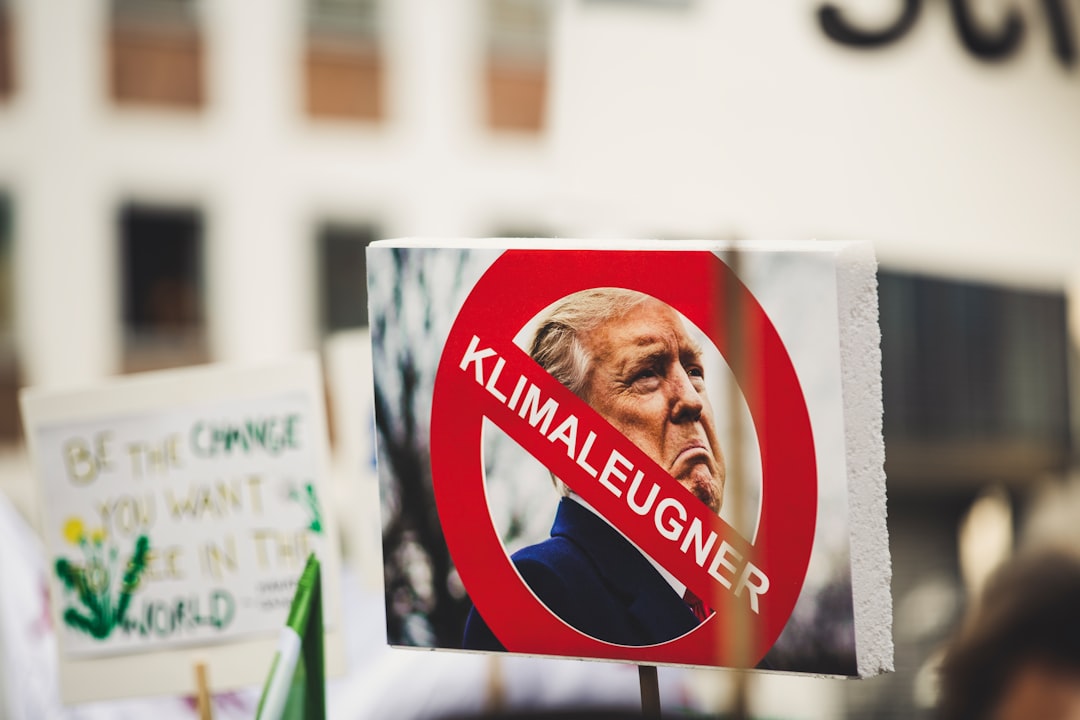
Media coverage can be misleading. A heavily discussed candidate may dominate search trends and betting slips without matching the committee’s priorities. Similarly, leaks should be treated with strong skepticism. The nomination archive remains sealed for decades, and credible advance knowledge is extremely rare.
A Practical Prediction Guide
A disciplined approach begins with separating public popularity from committee plausibility. The strongest candidates usually connect to a clear peace-related theme, show sustained impact, and fit the mood of the year. Consider the following framework:
- Identify the global theme: Is the year dominated by war, authoritarianism, displacement, nuclear risk, climate security, democracy, or humanitarian emergency?
- Review historical precedent: Compare candidates with past laureates. The committee often balances individuals and organizations across cycles.
- Check institutional credibility: Long-term, verifiable work usually matters more than sudden fame.
- Watch odds movement carefully: A shortening price may reflect informed analysis, but it may also reflect public hype.
- Calculate implied probability: Convert odds into percentages and ask whether the implied chance feels realistic.
- Compare bookmakers: Different operators may show very different prices, especially in thin markets.
Suppose an international humanitarian organization is priced at 6.00, implying roughly 16.7%. If another book offers 9.00, implying 11.1%, the difference is meaningful. It does not prove value, but it shows why market comparison matters.
Risk Management and Responsible Betting
Nobel Peace Prize betting should be treated as speculative entertainment, not a reliable investment. The market is vulnerable to rumors, low liquidity, emotional narratives, and opaque decision-making. Even a well-researched selection can lose simply because the committee chooses a symbolic direction that markets did not anticipate.
Serious bettors should set firm limits. A common conservative rule is to risk only 1% of a bankroll on a highly uncertain novelty or political-style market. Avoid chasing odds that have already collapsed after a major news event, and never assume that a candidate’s moral worth translates directly into winning probability.
It is also important to follow local laws. Betting availability varies by jurisdiction, and some operators may not offer Nobel markets at all. Use licensed bookmakers only, read settlement rules before placing a bet, and confirm how joint winners are handled. The Peace Prize can be awarded to multiple recipients, which may affect payouts depending on the book’s terms.
Final Thoughts
Nobel Peace Prize betting odds are best understood as a snapshot of public expectation and bookmaker risk management, not as a window into the Nobel Committee’s private deliberations. Favorites may be plausible, but the prize has a long history of surprising observers and elevating causes that were underpriced or overlooked.
For anyone analyzing the market, the most useful tools are skepticism, probability calculation, historical context, and restraint. Look beyond headlines, compare prices, and remember that low-odds candidates can still be poor value. In a market shaped by secrecy and world events, the smartest prediction may be the one made with humility.